A Guide for Homeowners in Southeast Michigan
Garage door openers are one of those things you don’t think about—until they stop working. One day everything’s fine, and the next your car is trapped in the garage, you’re late for work, and the remote is suddenly useless.
So how long should a garage door opener last? And how do you know when it’s time to repair versus replace?
If you live in Southeast Michigan, the answer depends on a few local factors most homeowners don’t consider.
The Average Lifespan of a Garage Door Opener
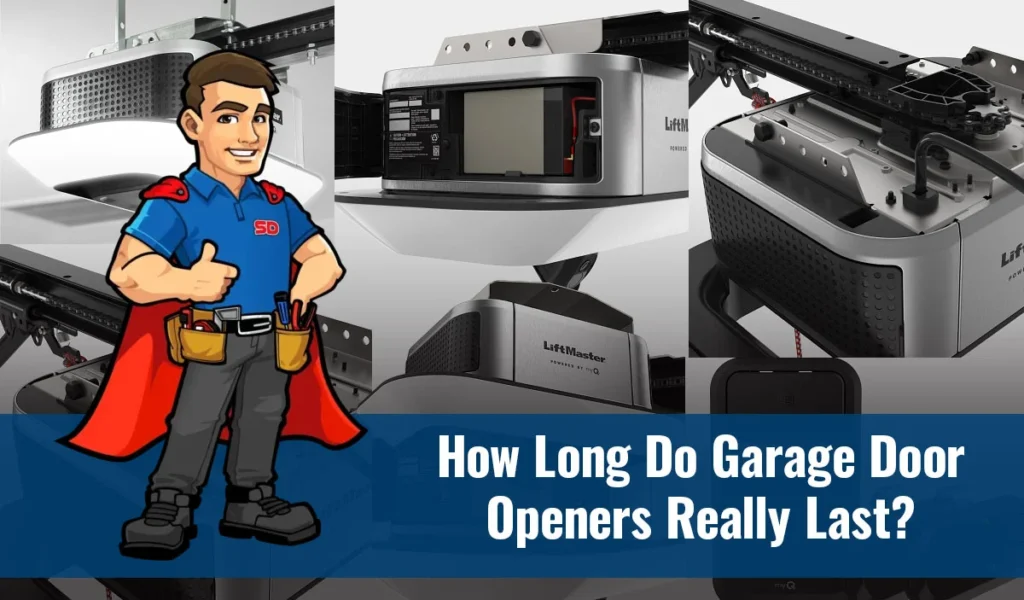
In general, most garage door openers last 10 to 15 years. That’s the broad national average. Some fail sooner, others keep going well past that range.
But lifespan isn’t just about age. It’s about use, environment, maintenance, and installation quality.
In Michigan, those variables matter more than you might think.
Why Michigan Weather Shortens Opener Life
Garage door openers in Southeast Michigan work hard year-round. Cold winters, humidity swings, and frequent freeze-thaw cycles all take a toll.
Here’s how local conditions affect opener longevity:
- Cold temperatures thicken lubricants and strain motors
- Moisture and condensation can corrode internal components
- Temperature swings cause metal parts to expand and contract
- Power fluctuations during storms stress circuit boards
An opener that might last 15–18 years in a mild climate may only last 10–12 years here without proper care.
Signs Your Garage Door Opener Is Near the End
Some failures happen suddenly. Most give warning signs first.
Watch for these red flags:
- The opener struggles to lift the door
- Grinding, buzzing, or rattling noises
- Door reverses randomly
- Remote works only intermittently
- Wall button responds slowly
- Safety sensors misfire frequently
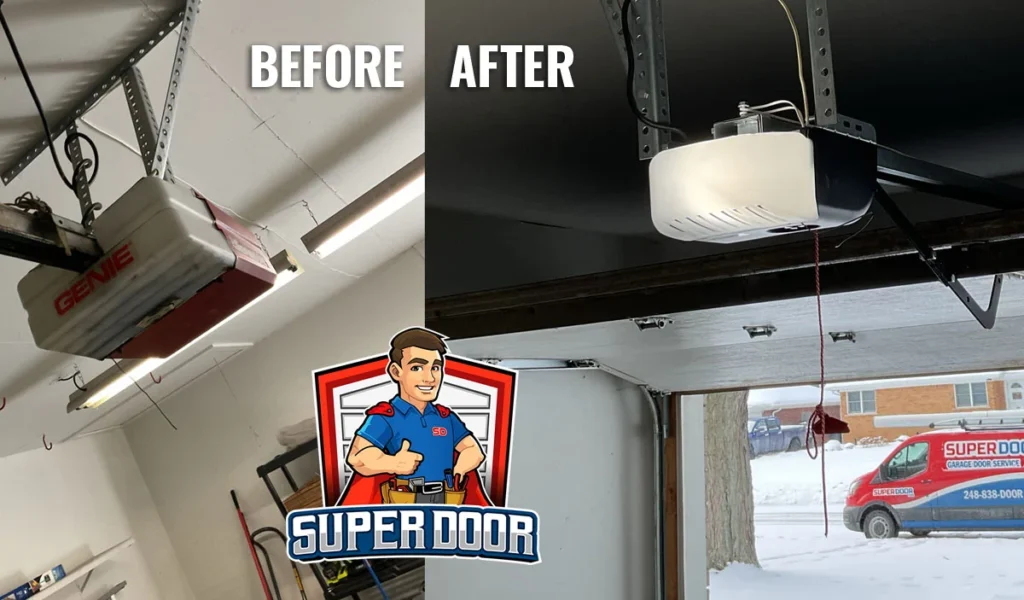
If your opener is over 10 years old and showing more than one of these issues, replacement often makes more sense than repeated repairs.
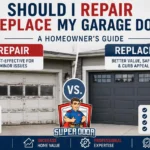
Repair or Replace? How to Decide
A good rule of thumb:
Repair makes sense when:
- The opener is under 8–10 years old
- The issue is mechanical (sensor, gear, wiring)
- Replacement parts are still readily available
Replacement makes more sense when:
- The opener is 10+ years old
- The motor is failing
- The control board is obsolete
- Safety features are outdated
- Repairs are becoming frequent
Newer openers are quieter, safer, and far more reliable—especially in attached garages.
How Long Do Different Opener Types Last?
Chain-Drive Openers
- Average lifespan: 10–15 years
- Durable but noisy
- Common in older homes
Belt-Drive Openers
- Average lifespan: 12–18 years
- Quieter and smoother
- Popular in newer homes
Screw-Drive Openers
- Average lifespan: 10–14 years
- Fewer moving parts
- Sensitive to temperature changes
Direct-Drive / Jackshaft Openers
- Average lifespan: 15–20 years
- Premium option
- Ideal for modern garages
Ways to Extend the Life of Your Opener
A little maintenance goes a long way:
- Lubricate moving parts twice a year
- Keep safety sensors clean and aligned
- Replace worn rollers before they strain the motor
- Balance the garage door annually
- Address noise or hesitation early
An unbalanced door is one of the fastest ways to burn out an opener motor.
When to Call a Professional
If your opener is struggling, making new noises, or behaving inconsistently, it’s worth having it evaluated before it fails completely.
A trained technician like those at Super Door Garage Door Service can tell you:
- Whether repair is safe and cost-effective
- If the door itself is causing the problem
- Whether an upgrade would save money long-term
Garage Door Openers Don’t Last Forever…
…but with proper care and timely decisions, you can avoid unexpected breakdowns.
If your opener is approaching the 10-15 year mark, now is the perfect time to plan rather than react.
More Expert Garage Door Advice