
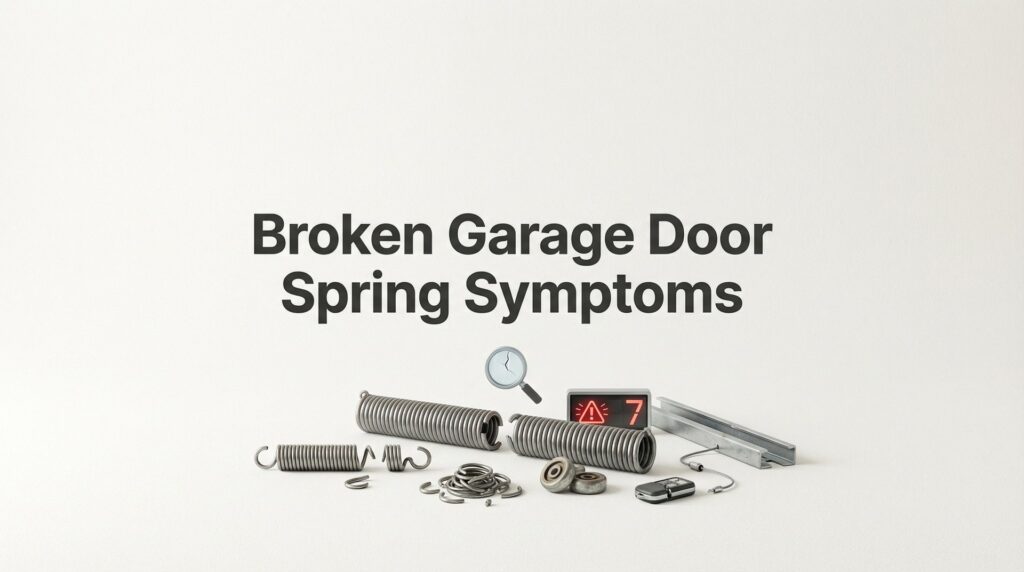
Garage door springs are the single most common emergency repair we perform throughout Livonia, Novi, Beverly Hills and surrounding southeast Michigan communities. During cold Michigan winters, we often receive calls from homeowners who heard what sounded like a gunshot inside their garage overnight. In most cases, a torsion spring has snapped after years of lifting a heavy garage door through thousands of opening and closing cycles.
While a broken spring is obvious once it happens, most springs actually give several warning signs before they fail completely. Knowing what those symptoms look like can help you schedule repairs before you’re stuck with a garage door that won’t open—or worse, one that becomes a safety hazard.
What We See Most Often in Southeast Michigan
In many cases, customers tell us they noticed strange noises or slower operation for several weeks before the spring finally snapped.
At Super Door, we replace hundreds of garage door springs each year. While every failure is different, these are the situations we encounter most often:
- “Older builder-grade doors that still have their original springs after 10-15 years.”
- “Doors that become noticeably heavier during winter because worn springs lose performance in cold temperatures.”
- “Rust forming on springs due to humidity and seasonal moisture.”
- “Homeowners continuing to use automatic openers after a spring has broken, leading to burned-out opener motors.”
Garage Door Springs Do More Work Than Most Homeowners Realize
Garage door springs are one of the hardest-working components of your entire home. Every time you leave for work, bring groceries inside, or return home at night, your springs are quietly lifting hundreds of pounds of garage door weight.
Most homeowners never think about them—until one breaks.
At Super Door Garage Door Service, broken springs are among the most common repair calls we receive throughout Livonia, Novi, Beverly Hills, Farmington Hills, Northville, Plymouth and surrounding Southeast Michigan communities. Many customers tell us the same story:
“Everything worked yesterday. This morning the door wouldn’t open.”
In reality, garage door springs usually provide several warning signs before they fail completely. Learning to recognize those symptoms can help you schedule repairs before you’re left with a garage door that won’t move—or worse, causes additional damage to your opener or door system.
Why Garage Door Springs Eventually Fail
Every garage door spring has a limited lifespan.
Most builder-grade torsion springs are rated for approximately 10,000 opening and closing cycles, which typically equals 7–10 years for the average family. Every time your garage door opens or closes, the steel expands and contracts under tremendous pressure.
Eventually, metal fatigue wins.
Several factors can shorten spring life, including:
- Frequent daily use
- Cold Michigan winters
- Rust and corrosion
- Lack of annual maintenance
- Improper spring sizing
- Heavy insulated garage doors
During Southeast Michigan winters, we often see an increase in broken spring calls after sudden temperature drops. Metal naturally contracts in cold weather, and older springs that are already weakened can finally snap during the first cold spell of the season.
1. You Hear a Loud Bang Coming From the Garage
This is by far the most common sign of a broken torsion spring.
Many homeowners describe the sound as:
- a gunshot
- a firecracker
- an explosion
- a car backfiring
It’s loud enough that many people initially think someone has broken into their home.
What you’re actually hearing is years of stored spring tension being released instantly.
A torsion spring may be supporting well over 200 pounds of door weight. When the steel finally fractures, all of that stored energy releases in a fraction of a second.
If you hear this sound:
Do not continue operating your garage door.
Although the opener may still try to lift the door, it was never designed to carry the entire weight by itself. Continuing to use it can quickly damage the opener motor, drive system and gears.
Instead, perform a simple visual inspection from a safe distance. Look above the garage door. If you notice a visible gap in one of the springs, it has almost certainly broken.
Call for repairs before attempting to use the door again.
2. Your Garage Door Suddenly Feels Extremely Heavy
One of the easiest ways to identify a failing spring is simply by how heavy the door feels.
When springs are working properly, they counterbalance nearly all of the garage door’s weight.
A properly balanced garage door should lift smoothly with very little effort.
If lifting the door suddenly feels like you’re trying to raise several hundred pounds, the spring system has likely failed.
Many homeowners are surprised to learn that their automatic opener isn’t actually lifting the garage door.
The springs perform nearly all of the heavy lifting.
The opener simply guides the balanced door along its tracks.
Without functioning springs, even the strongest opener begins struggling almost immediately.
If your door feels dramatically heavier than normal, avoid forcing it open.
Not only is there a risk of injury, but continuing to operate the door can quickly lead to opener failure as well.
3. The Garage Door Opens Crooked or Gets Stuck
Another common symptom we see throughout Livonia and Novi is a garage door that suddenly starts moving unevenly.
One side lifts normally. The other side drags behind. Sometimes the door twists slightly before stopping halfway open. This usually indicates one spring has failed while the other is still trying to lift the door. The remaining spring cannot evenly support the door’s weight, causing it to bind inside the tracks.
Continuing to operate the door in this condition can lead to:
- Bent tracks
- Broken rollers
- Damaged hinges
- Frayed cables
- Burned-out opener motors
- Door panel damage
The longer the problem continues, the more expensive the repair often becomes.
Technician Tip
If your garage door suddenly becomes noisy, heavier than usual or starts moving differently, don’t wait for it to stop working completely.
A professional inspection often identifies worn springs before they fail, preventing additional damage to your garage door opener and other components.
4. You Can See a Gap or Damage in the Spring
Sometimes the easiest way to diagnose a broken garage door spring is simply by looking at it.
If your garage door uses torsion springs, they’re mounted on a metal shaft directly above the garage door. When a spring breaks, you’ll usually see a noticeable gap—often one to three inches wide—in the tightly wound coils.
That gap means the spring has fractured and can no longer support the weight of the door.
Even if the spring hasn’t completely broken, there are several visual warning signs that it may be nearing the end of its life:
- Rust or corrosion on the coils
- Stretched or unevenly spaced coils
- Oil leaking from bearings near the spring assembly
- Visible wear where the spring meets the winding cone
- One spring looking noticeably different from the other
Michigan’s changing seasons can accelerate corrosion, especially in garages where road salt, melting snow and humidity are common. Over time, rust weakens the steel, increasing the likelihood of a sudden break.
Safety Reminder: Never touch or attempt to adjust a garage door spring yourself. Even a damaged spring may still be under hundreds of pounds of tension.
5. Your Garage Door Opener Starts Struggling
One of the most overlooked warning signs of a failing spring has nothing to do with the spring itself.
Instead, homeowners notice their garage door opener acting differently.
You may notice:
- The door opens much slower than it used to.
- The opener sounds louder than normal.
- The motor strains before the door begins moving.
- The opener stops halfway through its travel.
- The opener reverses unexpectedly.
- The opener’s lights begin flashing after an attempted cycle.
Many homeowners assume the opener is failing.
In reality, the opener is often working much harder because the springs are no longer doing their job.
Whether you have a LiftMaster, Chamberlain, Genie or Linear opener, these systems are engineered to guide a properly balanced garage door—not lift the full weight of a 200-pound door.
Ignoring a weak spring often turns a relatively simple spring replacement into an expensive opener replacement as well.
At Super Door, we’ve seen many opener failures that could have been prevented simply by replacing worn springs before they completely failed.
6. The Door Won’t Stay Open
Here’s a quick test that professionals perform during every garage door inspection.
With the door closed, disconnect the opener using the red emergency release cord.
Now carefully lift the door by hand until it’s about halfway open.
A properly balanced garage door should remain almost exactly where you leave it.
If the door:
- Drops closed
- Continues drifting downward
- Shoots upward
- Feels difficult to control
…the spring system is no longer properly balanced.
This doesn’t always mean the spring has completely broken.
Sometimes the springs have simply lost enough tension over years of use that they can no longer safely support the door’s weight.
If your garage door won’t stay in position, schedule service before continuing to use it.
An unbalanced door places unnecessary stress on every moving component, including the opener, cables, rollers and hinges.
7. Your Garage Door Makes New Grinding, Squeaking or Popping Noises
Garage doors naturally make some noise.
But new sounds almost always indicate that something has changed.
Pay attention if you begin hearing:
- Grinding
- Popping
- Squeaking
- Metallic scraping
- Clicking
- Twanging sounds
While these noises don’t always indicate a broken spring, they often point to springs that are wearing out or losing lubrication.
As springs age, they no longer unwind smoothly.
Instead, they bind slightly during operation, creating additional friction throughout the lifting system.
Our technicians frequently find that customers who report new noises are only weeks—or sometimes days—away from complete spring failure.
Don’t ignore new sounds simply because the door still works.
They are often one of the earliest warning signs that something needs attention.
Should You Replace Both Garage Door Springs?
One of the most common questions we hear is:
“Only one spring broke. Do I really need to replace both?”
In most cases, the answer is yes.
Garage door springs are installed together and perform the same amount of work every day.
If one spring has reached the end of its lifespan, the second spring has usually experienced nearly identical wear.
Replacing only the broken spring often means the second spring fails weeks or months later.
Replacing both springs at the same time offers several advantages:
- Restores proper door balance
- Reduces wear on the opener
- Prevents another service call
- Extends the life of the entire garage door system
- Provides smoother, quieter operation
Our technicians inspect both springs during every repair and will recommend the most cost-effective solution based on their condition.
Can You Open a Garage Door With a Broken Spring?
Technically, yes. Should you? Almost never.
Trying to force open a garage door with a broken spring can:
- Burn out your garage door opener
- Damage lift cables
- Bend door tracks
- Cause the door to fall unexpectedly
- Create a serious injury hazard
If you absolutely must open the door—for example, to remove a vehicle during an emergency—it should only be done carefully with enough people to safely support the full weight of the door.
For most homeowners, the safest decision is to leave the door closed and call for professional repairs.
Quick Reference Guide
| Symptom | Possible Cause | Should You Continue Using the Door? |
|---|---|---|
| Loud bang from garage | Broken torsion spring | No |
| Door feels unusually heavy | Weak or broken spring | No |
| Door opens crooked | One spring has failed | No |
| Visible gap in spring | Broken spring | No |
| Opener struggling or slowing down | Springs losing tension | Schedule service soon |
| Door won’t stay halfway open | Springs out of balance | No |
| New grinding or popping noises | Worn springs or hardware | Have it inspected |
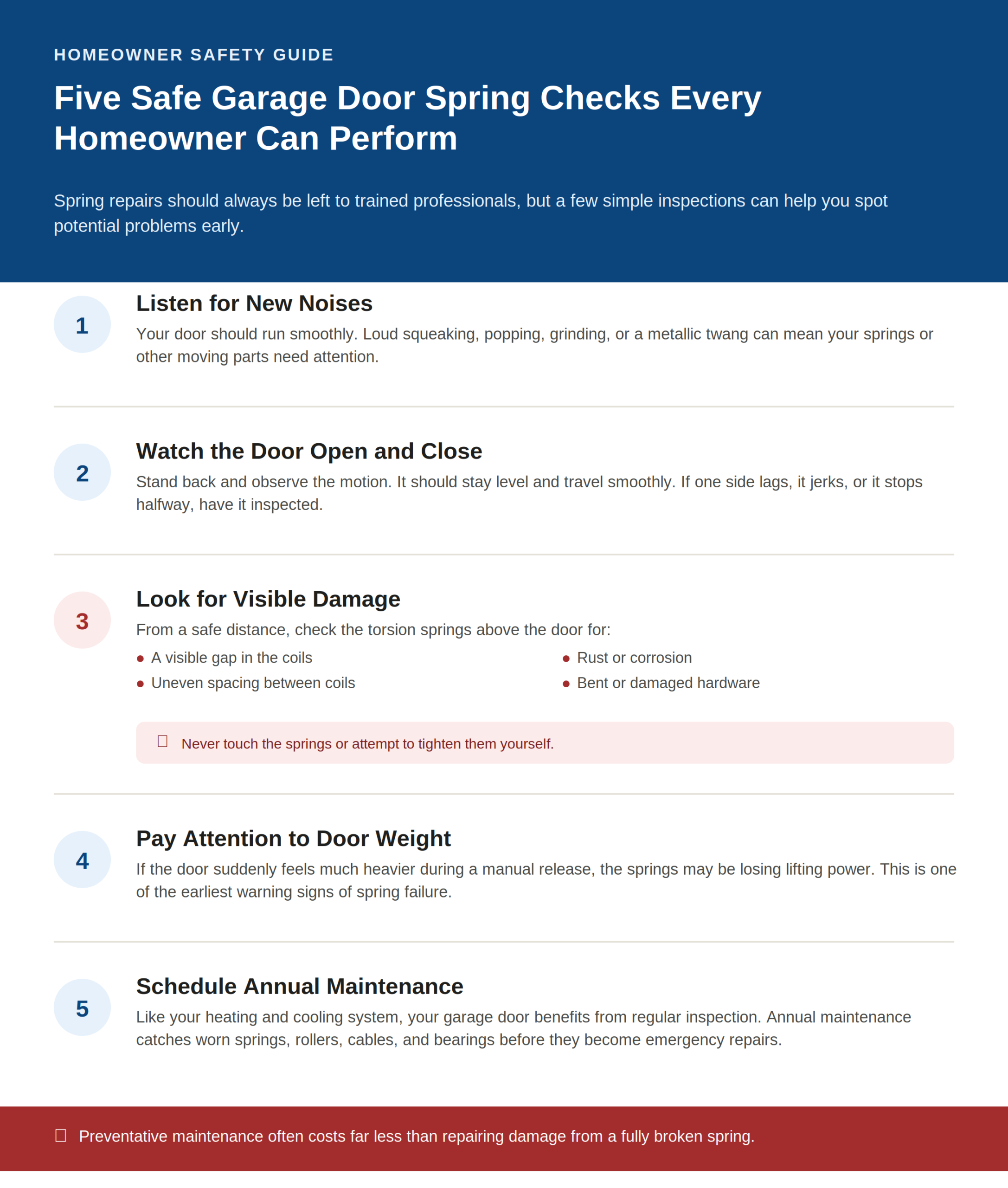
Five Safe Garage Door Spring Checks Every Homeowner Can Perform
While garage door spring repairs should always be left to trained professionals, there are a few simple inspections you can safely perform to spot potential problems early.
✓ Listen for New Noises
Your garage door should operate relatively smoothly. If you suddenly hear loud squeaking, popping, grinding, or a metallic “twang,” your springs or other moving components may need attention.
✓ Watch the Door Open and Close
Stand back and observe your garage door as it moves. It should travel smoothly and remain level from side to side. If one side lags behind, the door jerks, or it stops halfway, have it inspected.
✓ Look for Visible Damage
From a safe distance, look above the garage door at the torsion springs. Check for:
- A visible gap in the coils
- Rust or corrosion
- Uneven spacing between coils
- Bent or damaged hardware
Never touch the springs or attempt to tighten them yourself.
✓ Pay Attention to Door Weight
If your garage door suddenly feels much heavier when using the manual release, the springs may be losing their lifting power. This is one of the earliest warning signs of spring failure.
✓ Schedule Annual Garage Door Maintenance
Just like your heating and cooling system, your garage door benefits from regular inspections. Annual maintenance allows worn springs, rollers, cables and bearings to be identified before they become emergency repairs.
Preventative maintenance often costs far less than repairing the damage caused by a completely broken spring.
We created this checklist as an easy to download graphic. Print it out and tape it to your garage wall to reference each month:
How long do garage door springs typically last?
Can I replace a garage door spring myself?
Is it safe to use my garage door opener if a spring is broken?
Should both garage door springs be replaced at the same time?
Why do garage door springs seem to break during winter?
What are the first signs that a garage door spring is wearing out?
Does a broken spring mean I need a new garage door?
Not usually. In most cases, replacing the broken spring is all that’s required. However, if the garage door itself is severely damaged, outdated, or multiple major components have failed, replacing the entire door may be the more cost-effective long-term solution.
Protect Your Home by Catching Spring Problems Early
Garage door springs rarely fail without warning. In many cases, homeowners notice subtle changes in how their garage door sounds, feels or moves weeks before the spring finally breaks. Recognizing those warning signs early can help you avoid costly damage to your opener, reduce safety risks and prevent the inconvenience of a garage door that suddenly won’t open.
If you’ve noticed a loud bang, a heavier-than-normal door, uneven movement, visible damage to the springs or an opener that’s working harder than usual, it’s time to have your system inspected by a professional.
At Super Door Garage Door Service, we provide expert garage door spring replacement, repairs and maintenance for homeowners throughout Livonia, Novi, Beverly Hills, Farmington Hills, Northville, Plymouth, Canton and the surrounding Southeast Michigan communities. Our experienced technicians accurately diagnose spring problems, explain your repair options clearly and restore your garage door to safe, reliable operation using high-quality replacement parts.
Don’t wait until you’re trapped inside—or outside—your garage.
Contact Super Door Garage Door Service today to schedule a professional garage door spring inspection or repair, and let our local team help keep your garage door operating safely for years to come.
More Expert Garage Door Advice


Why Garage Door Springs Eventually Fail
Every garage door spring has a limited lifespan.
Most builder-grade torsion springs are rated for approximately 10,000 opening and closing cycles, which typically equals 7–10 years for the average family. Every time your garage door opens or closes, the steel expands and contracts under tremendous pressure.
Eventually, metal fatigue wins.
Several factors can shorten spring life, including:
- Frequent daily use
- Cold Michigan winters
- Rust and corrosion
- Lack of annual maintenance
- Improper spring sizing
- Heavy insulated garage doors
During Southeast Michigan winters, we often see an increase in broken spring calls after sudden temperature drops. Metal naturally contracts in cold weather, and older springs that are already weakened can finally snap during the first cold spell of the season.